News
We are currently working on several projects:-
- Fas Training center Shannon
- Private house in Kilternan Dublin
- Tus Nua Hospital in Enniscorthy
- Thomas Moore Tavern Wexford
- Ballygunnar Church Waterford
- Private House in Courtown
- National School project in Clonmel
Upcoming Projects
- Limerick City Art Gallery
- Nenagh Hospital
- St Peters Church Bray
- Private Dwelling in Greystones
- Teagasc in Carlow
- Private House in Mulgannon Wexford
We have recently completed Egyptian Embassador's Residence in VM Zinc & Paralon
We have recently completed roofing works to Mount Melleray Retreat Centre
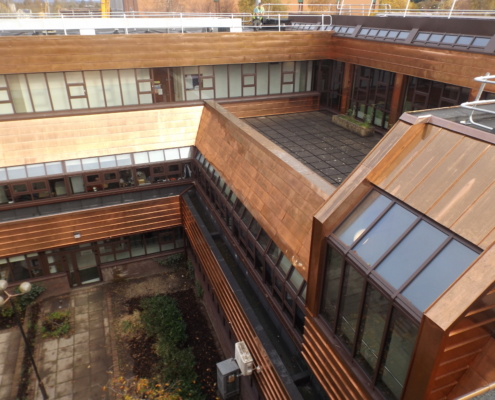
We have recently completed Copper Works and PVC Roofing works to the Royal College of Surgeon

Cooper Roofing
KME / TECU / LUVATA
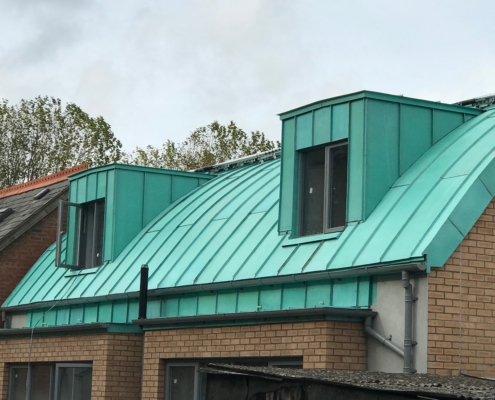
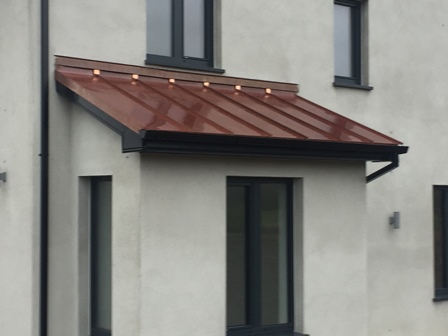
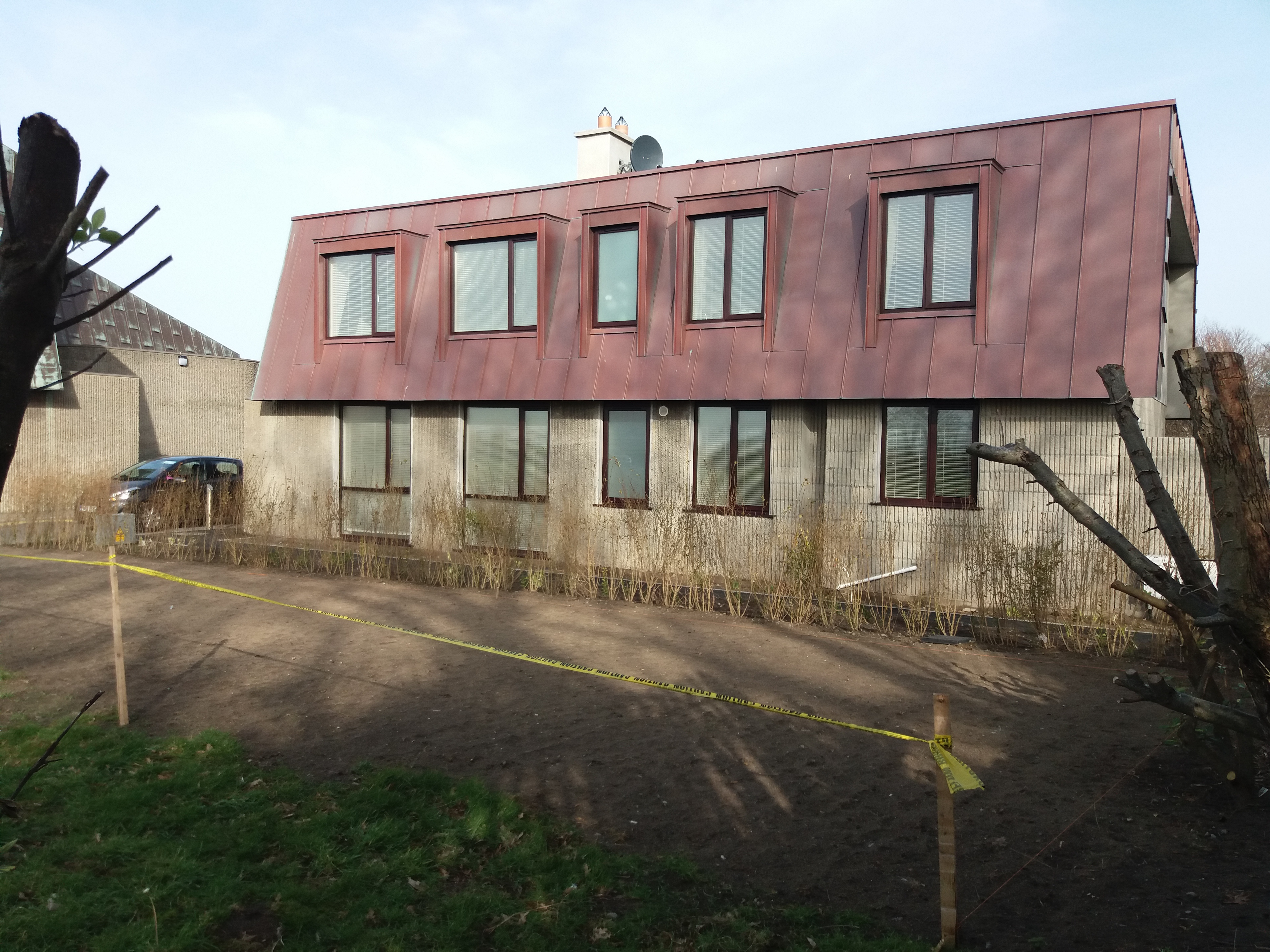
Copper has been used as a waterproof roofing material since ancient times and can be recognised by the greenish roofs and domes on today's buildings. This colouring is the reaction of air with copper which creates an additional protection against corrosion. Firstly copper oxide forms, followed by cuprous and cupric sulphide then subsequently the green layer of copper carbonate, called verdigris or patina.
Today, tried and tested fixing details and techniques make copper the ideal trouble-free building material for roofing, cladding, flashings, gutters, downpipes and other architectural details. Advances in prefabrication techniques and machinery and fixing technology have greatly reduced costs, which enables copper to be used in a greater variety of building situations than in the past.
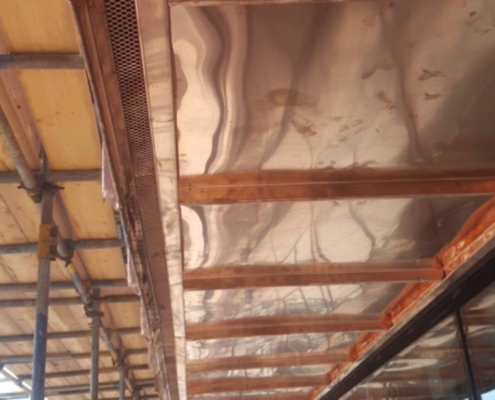
Copper is rolled to thicknesses ranging from 0.5 to 1.0mm, but 0.6 to 0.7mm thickness is usually used for roofing. It can be worked at any temperature and does not become brittle in cold weather. It is available in sheets or strips and is generally regarded as a lightweight covering requiring a substrate such as boarding.
Careful consideration is paid to the design of each copper roof, particularly where complex three-dimensional corners found at chimneys, gullies and valleys, must maintain junction integrity. The complex junction pieces must be carefully patterned and folded tight to ensure a complete seal.
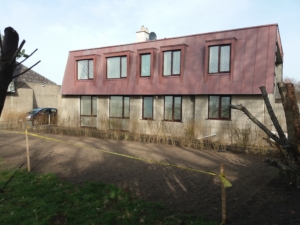
Over the years we have been providing solutions, we have developed custom solutions for nearly every type of situation, as well as the ability to resolve any unique challenge.
You can view examples of our copper roofing in our Portfolio, or contact us for further details.
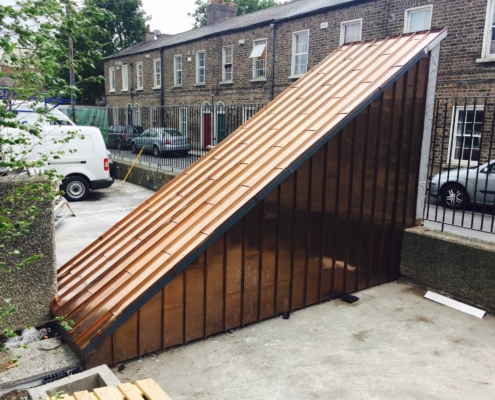
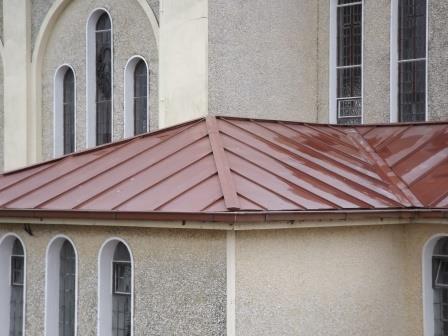
There are then two basic fitting methods: the roll baton or standing seam methods. When using the roll baton method, batons are securely fixed to the deck, forming the bays which are a characteristic feature of these roofs. The copper bays are formed to the exact specifications of your roof, and fixed into the prepared bays. Cappings and trims are welted on to provide a watertight seal at all the joins.
Using the standing seam method, the copper is secured to the roof by the means of stainless steel clips, fitted between the upstands of the copper bays, which are then welted together.
Recent Projects
|
DME Patina Copper Paralon Ard HS Roof
|
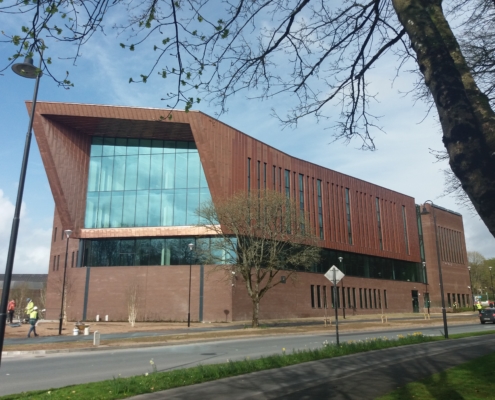
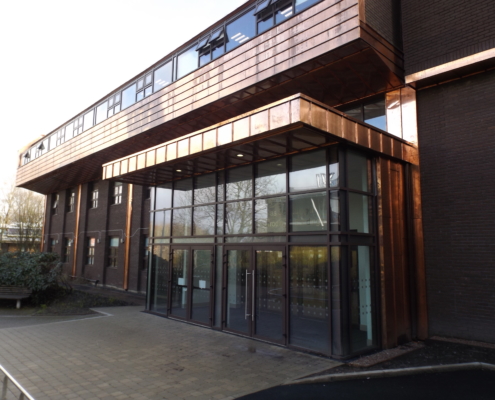
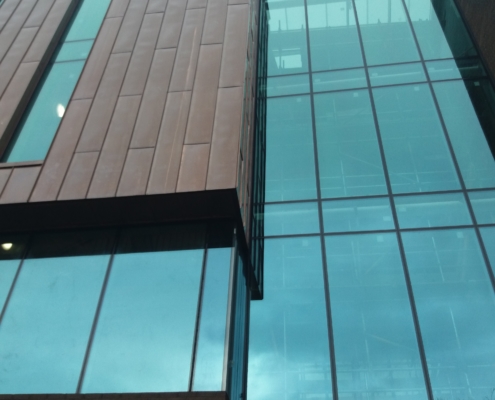
Royal College of Surgeons, Merrion Sq. Classic Copper Cladding
|
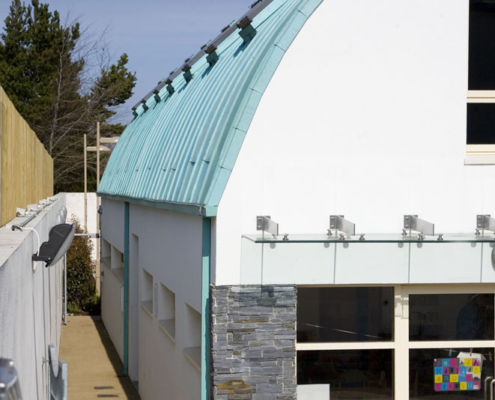
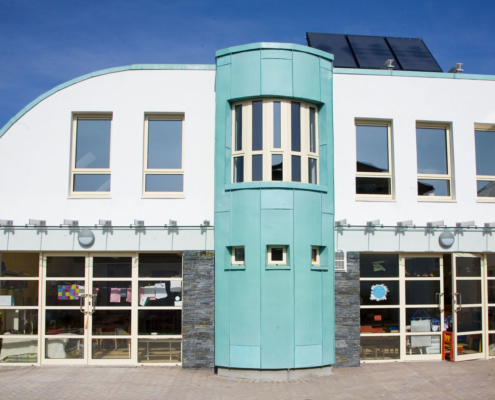
Tinahealy Creche & Child Care Facility Tecu Patina Copper & PVC Roofing
|
|
Copper Roofing Office Development County Wexford |
Private residence, County Wexford
|
|
Click here to view our other recent projects>>